


how-to-save-money-without-feeling

How to Create a Budget for ₹50k Salary?

Discover how to stretch your ₹ 50k salary effectively by utilising smart budgeting,  savings schemes, and digital tools such as saving calculators.

2025-04-17

429 Views

9 minutes read

Getting paid ₹50,000 a month feels great until you begin doling it out on rent, bills, groceries, travel, and a life outside of work. Before you know it, your salary seems to disappear, quicker than your resolve around weekend pizza or your willpower on a spree of online shopping.

But guess what? It's not about making crores, it’s about financial freedom. It’s about how smartly you use what you earn. Whether you're a young graduate, an up-and-coming professional wanting to balance the spend and save act, or an individual planning to create a secure financial future, this manual is your go-to blueprint to keep the money monster at bay and live more wisely. This blog will guide you through it all, from learning about your spending and establishing achievable financial objectives to using a savings calculator and taking advantage of small savings schemes for long-term gains. 
 

Key Takeaways

  • Intelligent budgeting on a 50k salary is easily possible with discipline and online aids, such as calculators for saving.

  • Being able to distinguish between necessary expenses and luxury wants is the key to money awareness and future savings.

  • Small savings plans enable you to earn higher interest with tax advantages and minimal entry barriers.

  • Creating an emergency fund and purchasing minimum insurance coverage are essential for unexpected events.

  • Budgeting and saving are not one-shot activities - monitoring, monitoring, and automating contribute to long-term success.

Start with the 50-30-20 Rule

The 50-30-20 budgeting rule is a great starting point for a monthly income of Rs. 50,000:

  1. 50% (₹25,000) is spent on needs like rent, groceries, utilities, transportation.

  2. 30% (₹15,000) can be spent on wants such as subscriptions, dining out, shopping.

  3. 20% (₹10,000) goes directly to savings and investments.

This simple formula helps you create balance. It ensures your needs are covered, you have room for fun, and you’re preparing for the future simultaneously.

Build Guaranteed Savings for Your Future Goals

Please enter correct name Please enter the Full name
Please enter valid mobile number Please enter Mobile Number
Please enter valid email Please enter Email

Enter OTP

An OTP has been sent to your mobile number

Didn’t receive OTP?

Application Status

Name

Date of Birth

Plan Name

Status

Unclaimed Amount of the Policyholder as on

Name of the policy holder

Policy No.

Address of the Policyholder as per records

Unclaimed Amount

Error

Sorry ! No records Found

.  Please use this ID for all future communications regarding this concern.

Request Registered

Thank You for submitting the response, will get back with you.

Thank you for your interest in our product. Our financial expert will connect with you shortly to help you choose the best plan.

Prioritise Fixed and Essential Expenses

Your starting point to good budgeting is determining your fixed, non-adjustable expenses:

  1. Rent or house loan EMI.

  2. Kitchen groceries and staples.

  3. Utility payments: electricity, water, Wi-Fi.

  4. Commuting costs on a daily basis or fuel.

  5. Insurance policy payments or health membership fees.

Work out these amounts to get your "must-spend" budget. It makes you remain grounded and not go into a budget deficit later.

Do you know

Did You Know?

Indian households' net financial savings dropped to a 5-decade low of 5.1% of GDP, highlighting the need for disciplined budgeting and savings.


Source: BizFinance News

Promise4 Wealth Plan - Canara HSBC Life Insurance

Use a Savings Calculator for Smart Planning

A calculator also enables you to understand your savings goals better. All you have to do is fill in your savings amount, return on investment, and time frame for saving. The calculator will then provide a precise calculation of your future value of savings. You can even play around with the numbers for various goals, be it for a bike purchase, vacation plans, or setting up a down payment fund. This makes savings more purposeful and goal-driven.

Investment Calculator

Our investment calculator can easily help you plan the needed financial corpus for your goals.
1
My Goal
2
Investment Amount
3
Additional Details
4
Our Recommendation
My Goal
Investment Amount
Additional Details
Our Recommendation
Goal
saving
Corpus Created in {corpusYear} year
you Invest {investAmount} over {totalYear} Years
0 year
₹ 1.20Lakh
1 year
₹ 1.20Lakh
2 year
₹ 1.20Lakh
8 year
₹ 1.20Lakh
9 year
₹ 1.20Lakh
10 year
₹ 1.20Lakh
Hi {name}, We recommend to start investing
per month for {totalYear} years
Invest Now
Disclaimer-

The above calculation and illustration of figures are indicative only and not on actual basis.

Explore Small Savings Schemes

When seeking to invest your money securely, government-backed small savings schemes are your safest bet:

These are:

  1. Public Provident Fund (PPF): High returns and tax benefits with a 15-year lock-in.

  2. Recurring Deposits (RDs): Ideal for systematic monthly savings.

  3. National Savings Certificates (NSC): Suitable for medium-term goals.

  4. Post Office Monthly Income Scheme (POMIS): Suitable for fixed monthly income.

These schemes protect your savings from market fluctuations while providing stable growth and benefits.

Automate Your Savings

Automation is your best friend when it comes to consistency. By setting up auto-debits for your savings, you remove the thinking from saving. Link your account to SIPs, monthly deposits, or emergency funds, and leave the rest to your bank. In this manner, your money gets invested where it is needed, without you having to recall it every month.

Cut Down on Hidden and Impulse Expenses

Even small habits in your lifestyle can cause huge leaks in your finances. That additional latte, impulse Swiggy orders, or missed subscriptions may not be much on their own, but add up monthly. Do a monthly review of your expenses and identify areas to cut back. Channelling these amounts into investments or your emergency fund will yield long-term benefits.

Invest in Basic Insurance

Think of insurance as your budget's safety valve. Even if you’re just starting out:

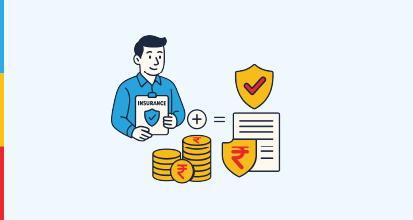
A ₹500/month term plan can offer a cover of up to ₹50 lakhs. These small monthly investments can save you from financial ruin.

Plan for Medium and Long-Term Goals

Financial success isn’t about just surviving the month. It’s about building for tomorrow:

  • Want to travel abroad, buy a house, or pursue higher education? Budget for it.

  • Allocate funds based on goal urgency and time horizon.

  • Use diversified investments like mutual funds, PPF, ULIPs, or digital gold.

These contributions, even if small now, can create substantial wealth thanks to compounding.

Track, Review, Repeat

Budgeting is not a one-time effort. It’s a living plan that evolves with you.

  • Monitor your expenses monthly.
  • Reassess your budget every quarter.
  • Update your savings goals as your salary grows.

Use tech to your advantage. Budgeting apps, digital bank tools, and spreadsheets help you stay informed and in control.

Conclusion

Making ₹50,000 may appear to be too little for financial aspirations, but it can be plenty with the proper plan. Budgeting is an empowering life skill. It creates freedom, not limitation, and lays the foundation for financial achievements, from emergency savings to homeownership.

Canara HSBC Life Insurance offers versatile and affordable financial products that fit seamlessly into your budget, from term plans to savings policies. As your budget grows, so can your investments in your future.

So, whether you’re starting from scratch or refining an old routine, remember: money management is the bridge between your salary and your dreams.

Glossary

  1. Saving Calculator: A computer programme that uses input data to predict how much your savings will increase over time.
  2. Small Savings Scheme: Government-supported schemes that offer steady returns with minimal risk and often come with tax benefits.
  3. Emergency Fund: A separate pool of savings set aside to cover sudden financial emergencies or disruptions in income.
  4. Auto-Debit: An arrangement where a set amount is automatically deducted from your account on a fixed schedule to ensure timely saving.
  5. Term Insurance: A simple, affordable life insurance plan that offers a fixed sum to the nominee if policyholder dies within the term.
Glossary book
Glossary Image Desktop

FAQs

By prudent budgeting, you can target saving 20–30% of your ₹50,000 salary. This is ₹10,000–15,000 per month, which can be divided between short-term requirements (emergency fund) and long-term objectives (PPF, SIPs, insurance). The actual figure will vary based on your lifestyle, fixed outgoings, and dedication to your financial objectives.

The 70-20-10 rule distributes your salary as follows:

  • 70% for living costs (rent, bills, groceries)

  • 20% for savings or investments

  • 10% for debt payments or donations

It's a good framework for people with fixed commitments and is a bit more generous than the 50-30-20 model.

A widely used personal finance approach, the 50-20-30 rule recommends:

  • 50% of income for necessities (rent, food, utilities)

  • 20% for savings and investments

  • 30% for desires (leisure, consumer goods)

This creates a balance between necessities, savings, and lifestyle choices.

According to this technique, your income is divided as:

  • 60% for necessary spending

  • 20% for savings or investments

  • 20% for discretionary spending

It provides greater latitude for lifestyle expenses than more restrictive budgeting structures.

A Rs. 50,000 monthly income is quite good for mid to early-career professionals in most Indian cities. With prudence, it can provide comfortable living, emergency funds, and even rudimentary investments. Your financial health is more a function of how you utilise this income than its relative magnitude.

Recent Blogs

ESIC Scheme

What is ESIC? Employees' State Insurance Corporation Explained

08 July '26
3914 Views
15 minute read
Want to know about ESIC? Learn what Employees' State Insurance Corporation is, its benefits, eligibility & coverage for salaried employees in India.
Read More
Saving Plan
Sum Assured Meaning Thum Desktop

What is Sum Assured in Insurance? Meaning and Definition

19 Apr '26
4225 Views
8 minute read
A sum assured is a fixed amount paid to the nominee of the insurance policy in the unfortunate event of the policyholder's demise during the policy tenure. Learn more about what is sum assured, and it's meaning.
Read More
Saving Plan
What Are The Best Long Term Saving And Investment Plans Thum Desktop

Best Long-Term Saving and Investment Plans Explained

15 Apr '26
1285 Views
8 minute read
Learn about the best long-term saving and investment plans, how they help build wealth over time, and which options suit different financial goals and life stages.
Read More
Saving Plan
Senior Citizen Savings Scheme Thum Desktop

Senior Citizen Savings Scheme (SCSS): A Complete Guide

10 Apr '26
5626 Views
10 minute read
Learn what the Senior Citizen Savings Scheme (SCSS) is, how it works, interest rates, eligibility rules and why it is a popular low-risk option for retirees.
Read More
Saving Plan
Compound Interest Beat Inflation Thum Desktop

Top 5 Investment Options for NRIs in India

16 Mar '26
3494 Views
9 minute read
Explore the top investment options for NRIs in India, including tax efficiency, repatriation rules and how to choose plans aligned with long-term goals.
Read More
Saving Plan
Guaranteed Return Plan Thum Desktop

Top Investments with Guaranteed Returns in India in 2026

13 Mar '26
1980 Views
8 minute read
Discover top investment options in India with guaranteed returns. Secure your financial future with reliable plans from Canara HSBC Life Insurance. Explore now!
Read More
Saving Plan
When Should One Start Saving And What Is The Best Savings Plan Thum Desktop

When Should You Start Saving? Choose the Best Savings Plans

11 Mar '26
1090 Views
7 minute read
Learn the right age to start saving and how to choose the best savings plan to achieve your financial goals effectively.
Read More
Saving Plan
Compound Interest Beat Inflation Thum Desktop

Pradhan Mantri Jan Dhan Yojana: Eligibility & Benefits Explained

04 Mar '26
3856 Views
9 minute read
Pradhan Mantri Jan Dhan Yojana ensures financial inclusion by providing access to banking, insurance, pension, and credit for Indian citizens. Learn more!
Read More
Saving Plan
Best Saving Plans

12 Best Saving Plans & Schemes in India with High Returns

04 Mar '26
896 Views
7 minute read
Know about the best saving plans in India such as NSC, SCSS, RD, MIS, PPF, KVP, SSY, Atal Pension Yojana and more. Read this blog and choose the best savings scheme for yourself.
Read More
Saving Plan

Savings and Investment Plans from Canara HSBC Life Insurance

We bring you a collection of popular Canara HSBC life insurance plans. Forget the dusty brochures and endless offline visits! Dive into the features of our top-selling online insurance plans and buy the one that meets your goals and requirements. You and your wallet will be thankful in the future as we brighten up your financial future with these plans.

Fixed Returns, Zero Risks & Worries

iSelect Guaranteed Future Plus
  • 4 Plan Options
  • Life cover + Guaranteed benefits
  • Accidental death benefit
  • Premium protection cover

Save, Dream, Plan. Live Peacefully

iSelect Guaranteed Future Plan
  • 4 plan options
  • Guaranteed Maturity Benefit
  • Premium Protection Cover
  • Tax Benefits