what-is-investment-management

What is Investment Management?

An overview of investment management, focusing on portfolio planning, asset allocation, and long-term financial goals.

Written by : Knowledge Centre Team

2025-12-16

897 Views

5 minutes read

Investing is a regular activity. You can invest your surplus and withdraw money when you need it. However, without investment management, you may find your investments slacking. Adequate and timely investment management can help you optimise your investment needs with the market growth.

While financial planning gives you an idea of your financial needs and resources, investment management starts with the execution of the plan. The moment you want your money to work harder for you, you will face the challenges and questions of investment management.

Definition: Investment Management

If you buy and sell stocks, that does not amount to investment. Such actions are merely transactional.

Handling financial assets and devising prudential strategies for acquiring and disposing of assets from your portfolio is a better definition of investment management.

Some of the commonly used terms to refer to investment management:

Scope of investment management:

  • Banking
  • Budgeting
  • Tax services
  • Trading
  • Acquisition and disposal

Must Read - What is Net Present Value?

Factors Affecting Investment Management

Investment management must account for the following important factors to provide effective guidance to your money. These factors are usually a part of your financial planning exercise:

  1. Rate of Return - If you are investing for the long haul, you may focus on wealth creation, whereas shorter-term objectives generally look at immediate cash flows and income generation.
  2. Investment Horizon - If you are planning for retirement, a pension fund is a place to go. If buying a car is on your wish list, a bank deposit is relevant.
  3. Degree of Risk Tolerance - Equity helps generate wealth but is volatile, real estate is illiquid and PPF accounts give moderate but stable returns. You will have to strike a balance when allocating your money across asset classes.
  4. Liquidity - What are your cash flow requirements? How much money do you want within reach each month? At which points in time in future do you expect more than usual outflow of money? Basis these answers you must spread your investments across liquid and illiquid assets.

Types of Investment Managers

Investment managers are key people in managing your money, growing it and returning it to you as safely as possible. They work under tremendous risk and invest your money keeping in view your financial objectives and your risk appetite. However, all investments have one objective in common-to grow your money. The aspired quantum of growth may vary depending on the risk appetite.

Some of the common avatars of investment managers:

  • Fund Manager:A fund manager manages your money and allocates them amongst stocks, bonds and g-secs.
  • Portfolio Manager: A portfolio manager would manage multiple funds that have objectives of their own.
  • Financial Advisor: A financial advisor provides expert tips on investing your money. A financial advisor has information on returns, costs and terms for various financial investment avenues available in the market.

Style of Investment Management

Investment styles vary across investment experts and also depend on your objectives and timelines. Different investment styles can also carry different investment risks and your choices will depend on your risk appetite:

  • Active: If you want to take advantage of short-term volatility in the market, an active strategy works best. However, keep the transaction costs in mind. The costs, of trading, should not exceed the money made from trading in stocks. (High-risk)
  • Passive: In this case, you keep an eye on your investment but don’t touch the money in the short term. You will reap better benefits if you stay invested. (Low-risk)

Know More - Passive Investing

  • Growth: This is a hybrid strategy depending on the trend of the stock and the underlying business fundamentals. (Medium-risk)
  • Value: Investing based on price to book value gives an intrinsic view of the stock and how would it fare when there is a market correction. (High-risk).
  • Income: The focus here is on earning money from dividends and interest on bonds. (safe to low risk)

Safe income funds will focus on generating income through fixed income securities like bonds and debentures. Aggressive income funds invest in blue chip equity stocks to generate income through dividends.

Also Read - Income from Salary

Performance Measures in Investment Management

You can rely on different performance measures to assess the results of your investments over time. Each method offers a unique perspective and should be used in appropriate scenarios. For example, CAGR is the most common method for representing mutual fund growth, while IRR would be more appropriate for regular investors.

You can consider any of the following measures to assess your investment choices:

  • Compound Annual Growth Rate (CAGR):  CAGR tracks the average annual growth, of your investments, over the defined period. It displays the average rate of return on your investments over a year. CAGR is helpful because it accurately measures growth (or degrowth) over time.
  • Internal Rate of Return (IRR):  IRR estimates the potential profitability of your investments.
  • Assets under Management (AUM):  AUM is the total market value of the investments that your fund manager manages on your behalf.
  • Portfolio Risk:  Portfolio risk can be measured with beta which determines the systematic risk of your portfolio. It is the weighted average of the beta coefficient of different stocks in your portfolio.

CAGR of Popular Investment Options

The majority of the portfolio investment options in India provide a CAGR for their historical performance.

Here are three popular investment options and their CAGR over a period:

  • National Pension Scheme (NPS):  NPS has given a historical return of anywhere between 8.63% to 12.83% per annum, over 10 years, depending on the scheme chosen
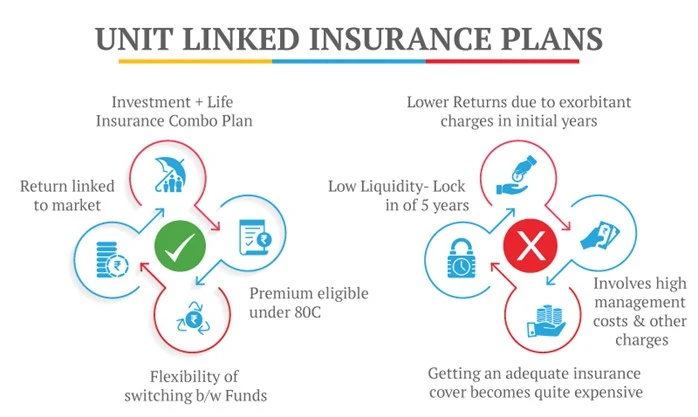
  • Unit Linked Insurance Plans (ULIPs): The ULIPs offered by Canara HSBC Life Insurance have given a CAGR in the range of 6% to 24%, over 3 years, depending on the fund chosen.
  • Equity Linked Savings Scheme (ELSS):The ELSS category has fetched an average return of 15% per annum over 10 years.

Must Read - NPS Withdrawal Rules

CAGR vs IRR in Investments

The CAGR of NPS and ULIP can vary a lot due to the range of fund choices within these investments. You can invest in a safe portfolio consisting of mostly government securities or invest in an aggressive portfolio of majorly equity stocks. The higher the risk, the higher your long-term returns can be.

Another factor you should consider is the bonus additions available to long-term investors in ULIPs. ULIPs like Promise4Growth Plus from Canara HSBC Life Insurance add wealth boosters and loyalty bonuses if you continue to invest for more than 5 and 10 years. Thus, your IRR from the ULIP plan will be very different from the CAGR reflected by the funds.
Investment management ensures your money is diversified across asset classes and financial instrument. The investment is made basis a clear growth plan, factoring in your risk appetite, and short/medium/long-term financial goals. Strategizing investment will help reduce transaction costs, save on taxes and fetch a better return on investment.


Build a Financial Plan that Protects and Grows Your Wealth

Please enter correct name Please enter the Full name
Please enter valid mobile number Please enter Mobile Number
Please enter valid email Please enter Email

Enter OTP

An OTP has been sent to your mobile number

Didn’t receive OTP?

Application Status

Name

Date of Birth

Plan Name

Status

Unclaimed Amount of the Policyholder as on

Name of the policy holder

Policy No.

Address of the Policyholder as per records

Unclaimed Amount

Error

Sorry ! No records Found

.  Please use this ID for all future communications regarding this concern.

Request Registered

Thank You for submitting the response, will get back with you.

Thank you for your interest in our product. Our financial expert will connect with you shortly to help you choose the best plan.


Recent Blogs

Wealth Management Thum Desktop

Wealth Management: A Guide to Build and Protect Your Assets

08 July '26
2682 Views
10 minute read
Learn about wealth management, its importance, and how it helps you grow, preserve, and transfer your wealth effectively. Discover key strategies and benefits.
Read More
Financial Planning
Types Of Financial Planning Thum Desktop

Net Present Value (NPV): Full Form, Meaning & Formula

08 July '26
3909 Views
10 minute read
Net Present Value (NPV) measures an investment's total value and profitability. Learn how NPV helps in investment planning with Canara HSBC Life Insurance.
Read More
Financial Planning
Types Of Financial Planning Thum Desktop

Personal Finance: Definition, Meaning, Importance & Tips

08 July '26
1329 Views
10 minute read
Learn the basics of personal finance, including saving, investing, insurance and budgeting, to manage money better and build long-term financial security.
Read More
Financial Planning
Types Of Financial Planning Thum Desktop

What is Recurring Deposit (RD)? Meaning & Features

07 July '26
1906 Views
7 minute read
Recurring deposits are a popular investment choice that helps in building your savings. You can choose to put the money in a lump sum or monthly to meet your financial goals over a period of time.
Read More
Financial Planning
5 Family Financial Hacks To Use in 2025

Family Financial Planning: Smart Money Management Tips

17 June '26
3934 Views
10 minute read
Discover practical family financial planning tips, budgeting strategies, emergency fund planning, insurance, savings and debt management to build long-term financial security.
Read More
Financial Planning
Compound Annual Growth Rate Thum Desktop

Compound Annual Growth Rate: How to Calculate CAGR?

03 Apr '26
2898 Views
8 minute read
Understand CAGR with our detailed guide. Use our CAGR Calculator for accurate financial planning. Explore more at Canara HSBC Life Insurance.
Read More
Financial Planning
5 Habits To Quit This New Year For Better Finances

5 Habits To Quit This New Year For Better Finances

28 Feb '26
1988 Views
8 minute read
Give up 5 money-draining habits and step into the new year with smarter financial choices.
Read More
Financial Planning
What is SIP?

What is SIP - SIP Meaning, Types, How Does SIP Work?

24 Feb '26
1100 Views
7 minute read
SIP - Systematic Investment Plan is the best way to invest in mutual funds. Learn more about SIP Investment, its meaning, benefits, and how to find the best SIP plans.
Read More
Financial Planning
Tips on Save Money in 2026

How to Save Money? Tips on Save Money in 2026

18 Feb '26
1472 Views
10 minute read
How to save money - Learn the best tips and some simple ways to save money. Learn more about the benefits of saving money as soon as you start earning.
Read More
Financial Planning

Financial Planning - Top Selling Plans

We bring you a collection of popular Canara HSBC life insurance plans. Forget the dusty brochures and endless offline visits! Dive into the features of our top-selling online insurance plans and buy the one that meets your goals and requirements. You and your wallet will be thankful in the future as we brighten up your financial future with these plans.

Fixed Returns, Zero Risks & Worries

iSelect Guaranteed Future Plus
  • 4 Plan options
  • Life cover + Guaranteed benefits
  • Accidental death benefit
  • Premium protection cover

Save, Dream, Plan. Live Peacefully

iSelect Guaranteed Future
  • 5 Plan options
  • Option to choose PPT
  • Get Tax benefits
  • Premium protection cover