



personal-finance-meaning-importance-and-tips-for-personal-finance

Personal Finance - Meaning, Importance, and Tips

Learn what personal finance is, why it matters, and how effective financial planning can help you achieve long-term goals

Daina Mathew - Canara HSBC Life Insurance

Written by : Daina Mathew

Shipra Chaudhary - Canara HSBC Life Insurance

Reviewed by : Shipra Chaudhary

Shipra Chaudhary - Canara HSBC Life Insurance

Shipra Chaudhary

Digital Marketing & MarTech Expert
With 5 years of experience in the insurance industry, she brings a nuanced understanding of its complexities to her writing. Her expertise allows her to craft clear, insightful content that makes intricate insurance topics accessible and engaging.

2026-07-08

1330 Views

10 minutes read

Managing money effectively is an essential part of achieving financial stability and meeting both short-term and long-term financial goals. If you have ever wondered what is personal finance, it refers to managing income, expenses, savings, investments, and financial protection to achieve your financial goals. It’s not just about earning more but also making informed decisions that help your money work harder for you. 

A well-managed personal finance plan gives you control over your financial future, protects you from unexpected setbacks, and allows you to pursue life goals with confidence. Whether you’re just starting your career or planning for retirement, understanding personal finance is the first step towards lasting financial well-being.

Key Takeaways

  • Personal finance involves managing income, expenses, savings, investments, and financial protection

  • Effective personal finance planning helps individuals achieve short-term and long-term financial goals

  • Personal finance management supports budgeting, wealth creation, and financial security

  • Building an emergency fund and maintaining adequate insurance can improve financial resilience

  • Consistent personal financial planning can help reduce financial stress and prepare for future needs

What is Personal Finance? Meaning and Definition

Personal finance is the process of managing your income, expenses, savings, investments, and financial protection to achieve both short-term and long-term financial goals. The personal finance meaning extends beyond budgeting and investing to include retirement planning, tax planning, and risk management. In simple terms, the personal finance definition covers all financial decisions that help individuals build financial stability and work towards their future objectives. 

Therefore, personal finance can be described as the practice of planning and managing money to meet current needs while preparing for future financial requirements. Today, individuals have access to a wide range of tools, information, and resources that can help them make informed financial decisions and manage their finances more effectively.

Build a Financial Plan that Protects and Grows Your Wealth

Please enter correct name Please enter the Full name
Please enter valid mobile number Please enter Mobile Number
Please enter valid email Please enter Email

Enter OTP

An OTP has been sent to your mobile number

Didn’t receive OTP?

Application Status

Name

Date of Birth

Plan Name

Status

Unclaimed Amount of the Policyholder as on

Name of the policy holder

Policy No.

Address of the Policyholder as per records

Unclaimed Amount

Error

Sorry ! No records Found

.  Please use this ID for all future communications regarding this concern.

Request Registered

Thank You for submitting the response, will get back with you.

Thank you for your interest in our product. Our financial expert will connect with you shortly to help you choose the best plan.

Components of Personal Finance

Personal finance has mainly five different components.

  • Income: Income forms the foundation of personal finance. A personal finance plan generally begins with identifying and managing sources of income. However, salary is not the only type of income. Things like business profits, dividend income, and freelance income are also part of it. All the sources of cash inflow are termed income.

  • Expenses: Cash outflows are another vital aspect of personal finance. A sound personal finance plan does not focus on eliminating expenses. Instead, it aims to balance spending, saving, and investing while supporting financial goals.  Instead, you should spend enough money that it can’t offset your financial goals.

  • Investments: Investment is a crucial part of personal finance. The purchase of land, stocks, and bonds, as well as the opening of a fixed deposit account, can be considered an investment. Investing in the right instrument aligned with your risk appetite can be tricky. Before making any investment decision, it is important to evaluate your financial goals, risk tolerance, and investment horizon.

  • Saving: It involves setting aside a portion of your income for future needs, such as emergencies, education, retirement, or other financial goals. Building savings creates a financial cushion and helps reduce dependence on borrowing during unexpected situations. 

  • Financial Safety: Last but not least are financial safety and protection. Financial protection is an important part of personal financial management, as unexpected events can affect financial stability. Unexpected events, such as accidents or natural calamities, can happen at any time to anyone. Appropriate insurance coverage can help individuals and families manage financial risks arising from unforeseen circumstances.

Do you know

Did You Know?

The share of equity and mutual funds in household savings rose from 2% in FY12 to 15.2% in FY25, reflecting growing interest in investing 


Source:
The Economic Times

Promise4WealthPlan - Canara HSBC Life Insurance

Personal Finance Tips for Effective Financial Planning

can help you manage your income, expenses, savings, and investments more efficiently. The earlier you start planning your finances, the more time you have to build financial security and achieve your goals. 

Here are the key steps you should take while devising your personal financial plan:

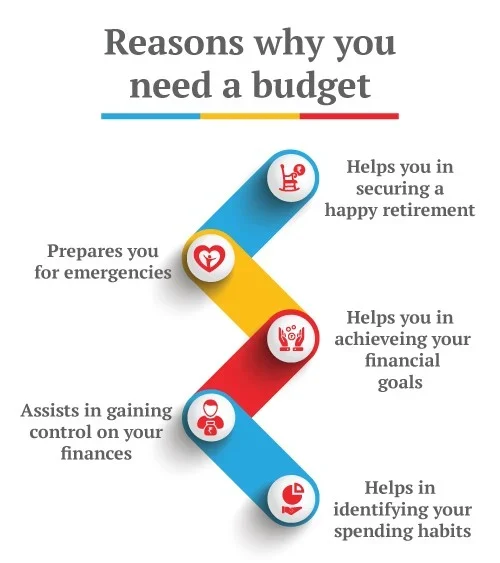
  1. Prepare a Budget: Budgeting is one of the most important personal finance management practices. A budget helps you track income, control expenses, and allocate money towards savings and investments.  A well-laid-out budget guides you to live within your means and motivates you to save extra for long-term financial goals.

    An ideal budget should look like the following:

    • 40% of net income for essentials like rent, groceries, utility bills, transportation, paying off debt, and insurance premiums payment
    • 30% should be allocated to discretionary expenditure, such as buying clothes, gadgets, dining out, and travelling to tourist destinations
    • The remaining 30% of net income must be saved for the future through different asset classes 
  2. Save First before Big Expenditure: If you’re early in your career, your primary goal should be to save up a decent amount as an emergency fund. Financial experts generally recommend maintaining an emergency fund that covers 3 to 6 months of essential living expenses.  You can stretch it up to 12 months for extra cushioning.

    Emergency funds should ideally be kept in easily accessible and low-risk financial instruments.  Accessibility should be your priority when storing money, not returns. For this purpose, bank FD, liquid and ultra-short-term mutual funds are best suited.

  3. Keep Expenses in Check: One of the key objectives of personal finance strategies is to reduce expenses. Unplanned spending can affect savings and long-term financial goals if not monitored carefully.  At its extreme, you could be spending more than your take-home pay, which is disastrous for your financial health.

    Regularly reviewing your expenses can help identify unnecessary spending and improve overall personal financial management.  List out all the requisite expenses for the coming year and allot a portion of your income towards it.

  4. Have Adequate Insurance: Insurance plays an important role in protecting individuals and families against unexpected financial challenges.  People often mistakenly believe that life insurance is a waste of money. But those who have gone through a difficult stage of life know the real value of insurance coverage. Here is how much cover you should opt for for financial security in times of need:

    • Life cover equal to at least 10 times your annual income

    • Health cover equal to your annual income

Life insurance and health insurance are the two types of insurance that people of all ages should get. The earlier you purchase an insurance policy, the lower the premium.

Minimising Tax Using Personal Finance

While taxes are unavoidable, effective tax planning can help individuals optimise their tax liability within the provisions of the Income Tax Act, 2025. By using eligible tax-saving investments and deductions, individuals can support both their financial goals and long-term personal finance planning.

Instrument Name

Tax Saving under Section

Lock-in & Return

Max Tax Exemption

PPF

123

15 years & 7.1%

₹1.5 lakhs

NPS

123 & 124

Up to 60 years of age & 8-12%

₹1.5 lakhs + ₹50,000

Life Insurance

123

Variable

₹1.5 lakhs

ELSS

123

Min 3 years & 10-15%

₹ 1.5 lakhs

PF

123

Up to 60 years of age & 8.1%

₹1.5 lakhs

SCSS

123

5 years & 8.2%

₹1.5 lakhs

ULIP

123

Variable

₹ 1.5 lakhs

NSC

123

5 years & 7.7%

₹1.5 lakhs

Home Loan Interest

22 & 130

Not applicable

₹2 lakhs

Home Loan Principal rep.

123

5 years

₹1.5 lakhs (₹2 lakhs for above 60 taxpayers)

There are several provisions in the Income Tax Act, 2025, for reducing tax liability. The most popular of them all is Section 123  (previously known as Section 80C). It is always advisable to invest ₹1.5 lakh per year in popular savings schemes that offer tax benefits under Section 123. You can choose more than one scheme and divide the whole amount into parts. Contributions to the National Pension System (NPS) may qualify for an additional deduction of up to ₹50,000 under Section 124 (previously known as Section 80CCD(1B)), subject to applicable tax provisions. 

Personal finance is a simple concept. However, there are multiple aspects to consider. If we try to implement too many things at once, we risk complicating matters. 

In reality, all we need to do is establish simple strategies and diligently follow the path they lay out. Automating your long-term investments allows you to focus on important and big financial decisions. With consistency, perseverance, and proper personal finance strategies, you can get to your desired financial targets.

How Does Personal Finance Help an Individual?

Personal finance is not limited to earning and spending money; it also involves managing income, expenses, savings, investments, and financial protection to achieve financial stability and long-term goals. Whether you are planning for short-term needs or future milestones, effective personal finance management can support your overall financial well-being. 

  • Ensures Financial Security: A well-managed personal finance plan can help individuals prepare for unexpected situations such as medical emergencies, loss of income, or other financial challenges.  By setting aside an emergency fund and investing in insurance, you create a financial cushion that prevents stress during tough times.

  • Helps in Achieving Financial Goals: Whether it’s buying a house, funding higher education, or planning a vacation, personal finance helps you set and achieve these goals systematically. Budgeting and disciplined savings help you track your progress and ensure you have enough funds when needed.

  • Reduces Debt Burden: Effective personal financial management can help individuals avoid unnecessary debt and manage financial liabilities more efficiently.  With a proper repayment strategy, individuals can clear loans on time, improve their credit score, and save money on interest payments.

  • Builds Wealth Over Time: Investing in the right financial instruments, such as mutual funds, stocks, or fixed deposits, helps accumulate wealth. A well-structured investment strategy can support long-term wealth creation and contribute to greater financial independence.

  • Promotes Better Spending Habits: Tracking expenses and sticking to a budget encourages mindful spending. When individuals are aware of where their money is going, they can cut unnecessary spending and focus on saving and investing for a better future.

  • Secures a Comfortable Retirement: One of the key objectives of personal financial planning is preparing for retirement.  Investing in pension plans, provident funds, and other retirement schemes helps individuals maintain their standard of living even after they stop working.

Common Personal Finance Management Mistakes to Avoid 

Effective personal finance management requires consistent planning and informed decision-making. However, many individuals make common mistakes that can affect their financial stability and long-term goals.  Here are some of the most common personal finance management mistakes to avoid:

  • Not Having a Budget: One of the most common mistakes is failing to create a budget. Without a clear understanding of income and expenses, it’s easy to overspend and struggle with savings. A budget supports better personal financial planning by helping individuals track expenses, prioritise spending, and allocate funds towards savings and investments.

  • Ignoring an Emergency Fund: Many people neglect building an emergency fund, assuming they won’t need it. However, unexpected expenses such as medical emergencies, job loss, or urgent home repairs can arise at any time. Financial experts generally recommend maintaining an emergency fund that covers three to six months of essential expenses

  • Overspending on Credit Cards: Credit cards offer convenience, but misusing them can lead to high-interest debt. Many individuals pay only the minimum due, resulting in accumulated interest and long-term financial strain. Using credit responsibly and paying outstanding balances on time can help reduce debt and improve financial health.

  • Not Investing Early: Delaying investments is another common mistake. Delaying investments may reduce the long-term benefits of compounding and wealth accumulation.  Even small early investments can grow significantly over time, so it’s important to start as soon as possible.

  • Ignoring Retirement Planning: Relying solely on a salary or savings without planning for retirement can lead to financial difficulties later in life. Investing in retirement plans like the Employee Provident Fund (EPF), Public Provident Fund (PPF), or National Pension System (NPS) can help secure a comfortable retirement.

  • Not Having Adequate Insurance: Many individuals either overlook insurance or opt for insufficient coverage. Health insurance, life insurance, and disability insurance are crucial for financial protection. Without them, unexpected medical expenses or loss of income can severely impact financial well-being.

  • Failing to Track Expenses: Small, frequent expenses can add up quickly. Many people don’t realise how much they’re spending on non-essential items like dining out, subscriptions, or impulse purchases. Regularly reviewing expenses can improve personal finance planning and help individuals allocate money more effectively towards their financial goals.

Conclusion

Personal finance plays an important role in helping individuals effectively manage their income, expenses, savings, investments, and financial protection. From budgeting and building an emergency fund to investing and planning for retirement, each aspect contributes to long-term financial well-being.

Effective personal finance planning does not require complex strategies. By setting clear financial goals, managing money responsibly, and reviewing finances regularly, individuals can build financial security and work towards their short-term and long-term objectives. Consistent personal finance management can help create a stronger financial future and improve overall financial confidence.

Glossary

  1. Emergency Fund: A reserve of money kept aside to cover unexpected expenses or temporary loss of income
  2. National Pension System (NPS): A government-backed retirement savings scheme that offers tax benefits and wealth accumulation
  3. Equity Linked Savings Scheme (ELSS): A tax-saving mutual fund with a mandatory lock-in period of three years
  4. Public Provident Fund (PPF): A long-term savings scheme offering tax benefits and government-backed returns
  5. Asset Class: A category of investment such as equity, debt, fixed deposits, or real estate

Glossary book
Glossary Image Desktop

FAQs

It is recommended to use the 50-30-20 rule to manage your finances. The 50-30-20 rule recommends allocating 50% of your income to needs, 30% to wants, and 20% to savings.

Personal finance is generally categorised into 5 main components: income, expenses , savings, investments,  and protection.

The 4 stages of personal finance are based on the 4 stages of life. They are the budgeting, accumulation, management, and distribution years.

The best time to start saving is when you begin working and earning money for yourself.

Yes, personal financing is of great help to salaried persons. Having a fund of any kind can be of great importance when they are no longer salaried.

Salaried individuals should create a budget, maintain an emergency fund, invest regularly, and review their financial goals periodically to improve financial stability.

The best time to start managing personal finances is when you begin earning, as starting early provides more time to save, invest, and build wealth.

The 50-30-20 rule is a budgeting approach where 50% of income is allocated to needs, 30% to wants, and 20% to savings and investments.

Recent Blogs

Wealth Management Thum Desktop

Wealth Management: A Guide to Build and Protect Your Assets

08 July '26
2682 Views
10 minute read
Learn about wealth management, its importance, and how it helps you grow, preserve, and transfer your wealth effectively. Discover key strategies and benefits.
Read More
Financial Planning
Types Of Financial Planning Thum Desktop

Net Present Value (NPV): Full Form, Meaning & Formula

08 July '26
3909 Views
10 minute read
Net Present Value (NPV) measures an investment's total value and profitability. Learn how NPV helps in investment planning with Canara HSBC Life Insurance.
Read More
Financial Planning
Types Of Financial Planning Thum Desktop

What is Recurring Deposit (RD)? Meaning & Features

07 July '26
1906 Views
7 minute read
Recurring deposits are a popular investment choice that helps in building your savings. You can choose to put the money in a lump sum or monthly to meet your financial goals over a period of time.
Read More
Financial Planning
5 Family Financial Hacks To Use in 2025

Family Financial Planning: Smart Money Management Tips

17 June '26
3934 Views
10 minute read
Discover practical family financial planning tips, budgeting strategies, emergency fund planning, insurance, savings and debt management to build long-term financial security.
Read More
Financial Planning
Compound Annual Growth Rate Thum Desktop

Compound Annual Growth Rate: How to Calculate CAGR?

03 Apr '26
2898 Views
8 minute read
Understand CAGR with our detailed guide. Use our CAGR Calculator for accurate financial planning. Explore more at Canara HSBC Life Insurance.
Read More
Financial Planning
5 Habits To Quit This New Year For Better Finances

5 Habits To Quit This New Year For Better Finances

28 Feb '26
1987 Views
8 minute read
Give up 5 money-draining habits and step into the new year with smarter financial choices.
Read More
Financial Planning
What is SIP?

What is SIP - SIP Meaning, Types, How Does SIP Work?

24 Feb '26
1100 Views
7 minute read
SIP - Systematic Investment Plan is the best way to invest in mutual funds. Learn more about SIP Investment, its meaning, benefits, and how to find the best SIP plans.
Read More
Financial Planning
Tips on Save Money in 2026

How to Save Money? Tips on Save Money in 2026

18 Feb '26
1471 Views
10 minute read
How to save money - Learn the best tips and some simple ways to save money. Learn more about the benefits of saving money as soon as you start earning.
Read More
Financial Planning
Types Of Financial Planning Thum Desktop

Types of Financial Planning: Key Strategies for a Secure Future

18 Feb '26
904 Views
Different types of financial planning guide your decisions at every life stage. Plan wisely from your first paycheck to retirement with Canara HSBC Life Insurance.
Read More
Financial Planning

Financial Planning - Top Selling Plans

We bring you a collection of popular Canara HSBC life insurance plans. Forget the dusty brochures and endless offline visits! Dive into the features of our top-selling online insurance plans and buy the one that meets your goals and requirements. You and your wallet will be thankful in the future as we brighten up your financial future with these plans.

Fixed Returns, Zero Risks & Worries

iSelect Guaranteed Future Plus
  • 4 Plan options
  • Life cover + Guaranteed benefits
  • Accidental death benefit
  • Premium protection cover

Save, Dream, Plan. Live Peacefully

iSelect Guaranteed Future
  • 5 Plan options
  • Option to choose PPT
  • Get Tax benefits
  • Premium protection cover