12 ways a Risk-Averse Investor gets Guaranteed Savings

12 Ways for a Risk-Averse Investor to Buy a Savings Plan or Scheme

Build a steady corpus with savings plans designed for capital safety.

Written by : Knowledge Centre Team

2026-01-09

994 Views

8 minutes read

Every individual has different financial goals and needs. Finding the right savings plan is crucial for achieving your financial goals. While you do so, it is essential to understand that some amount of risk follows all kinds of investments. With so many options floating around, one must find the most suitable option to get guaranteed returns at maturity.

Let’s explore different ways to buy a savings plan for an investor who can bear certain financial risks.

Key Takeaways

  • Risk-averse investors prefer fixed returns and capital safety over high but uncertain gains.

  • PPF and VPF are long-term safe options with tax-free interest and maturity.

  • NSC and government bonds ensure safety and steady returns for cautious savers.

  • SCSS is ideal for senior citizens seeking a guaranteed income after retirement.

  • Savings accounts offer low returns but high security with minimal risk.

Who is a Risk-Averse Investor?

Not all individuals readily accept the risks associated with a particular investment, hence becoming risk-averse in their investment needs. For example, an investor with a low or fixed income, who has higher financial responsibilities, tends to be more risk-averse than an investor with a high income and low financial responsibilities.

A risk-averse person ideally focuses on avoiding losses and maximising profits on their investments. The investor prefers sure-shot returns by investing in low-risk schemes and products, rather than avoiding high volatility in unknown markets and schemes.

Risk-averse investments have specific stability to them and are often tax-deductible under 80C, with tax-free maturity. By becoming a risk-averse investor, you choose to keep your capital safe rather than aiming for a higher return on it.

Build Guaranteed Savings for Your Future Goals

Please enter correct name Please enter the Full name
Please enter valid mobile number Please enter Mobile Number
Please enter valid email Please enter Email

Enter OTP

An OTP has been sent to your mobile number

Didn’t receive OTP?

Application Status

Name

Date of Birth

Plan Name

Status

Unclaimed Amount of the Policyholder as on

Name of the policy holder

Policy No.

Address of the Policyholder as per records

Unclaimed Amount

Error

Sorry ! No records Found

.  Please use this ID for all future communications regarding this concern.

Request Registered

Thank You for submitting the response, will get back with you.

Thank you for your interest in our product. Our financial expert will connect with you shortly to help you choose the best plan.

What Savings Plan or Scheme Can You Buy?

Plenty of options are available to risk-averse investors to invest their capital. Risk-averse investors should try and stay away from investments involving high price volatilities. One can calculate the amount of risk involved by the fluctuation/volatility of the price in the market. There are several risk-averse investment strategies:
  • Savings Account: The high-yield savings account provides a safe, long-term return with practically no investment risk to the particular amount invested. The high term yield differs with the type of savings account. However, the rate of return should exceed the prevailing rates of inflation. This strategy has the least amount of risk involved and mostly yields the lowest returns. For example, the Jan Dhan Yojana, initiated by the government, helped farmers and low-income individuals earn 4% interest on their hard-earned money, which they previously kept in cash.
  • Fixed Deposits: Fixed deposit is amongst the safest options available in the market at the moment for investment. The reason for the same is that they are not market-driven. Fixed deposits carry your invested amount for a predetermined time, during which interest can be earned, which depends on the bank and the number of years. Still, liquidity and return are relatively lower.

    Another benefit of investing in fixed deposits is that it is tax-exempt up to ₹1.5 lakh under the Income Tax Act, and also comes along with a lock-in period of 5 years. Fixed deposits offer interest rates of up to 8.5% per annum, whether in financial or private banks. For a public bank, the highest interest rate given is also the same. The investors should note that only the principal component can be qualified under tax deduction, and the interest is taxed as per the individual’s tax slab.

    Risk-averse investors who are not in immediate need of their capital can choose to invest it in Fixed Deposits. The FDs have the edge over the savings account. It pays slightly more than the regular savings account if the investor is willing to deposit money for a more extended period. There is a small risk of rising interest rates while the money is deposited and further losing a higher return rate.
  • Recurring Deposits: Investors do not have a particular lump sum to invest in Fixed deposits, like a common man earning a regular salary. However, saving a small amount to invest every month in recurring deposits can help earn a good sum from a fixed deposit. These investments come with a predefined duration and give assured returns at fixed interest rates.

    Most banks usually provide the same interest rate on RDs and FDs. By opting for recurring deposits, you have the choice to manage and arrange your investments, and the interest rate on them is revised and updated according to monetary policies. Moreover, individuals make recurring deposits to meet future demands and needs, such as purchasing a car or planning a vacation.
  • Provident Funds: Provident Funds is the most suitable option when thinking about the future and retirement, as it promises extreme safety and regular returns.
    1. Public Provident Fund (PPF): It is again one of the safer investment options as it is sovereign by the government. PPF comes with a 15-year lock-in period, and the invested capital qualifies for a tax deduction. The maturity and interest earned are tax-exempt under Section 80C. Currently, PPF offers 8% compound interest per annum, but this rate may be subject to change if the interest rate is reviewed quarterly by the Ministry of Finance based on the yields of government bonds.
    2. Voluntary Provident Fund (VPF): Voluntary Provident Fund is a small scheme that offers guaranteed returns as it is directly deducted from your salary. It allows the employee provident fund practitioner to invest over his/her mandatory EPF contribution. It earns the same interest as EPF and is also tax-exempt.
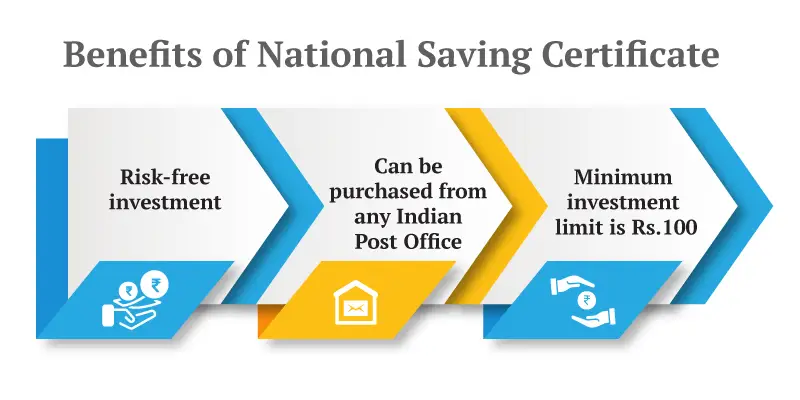
  • National Savings Certificate: Risk-averse investors receive guaranteed returns by investing in NSC. It is a fixed investment scheme and offers a lock period of up to five years or ten years, depending on the chosen scheme. One can invest with a small amount, and there is no maximum limit. One can also use NSC as collateral.
  • Government Bonds/ Securities: Bonds are considered to be safe spaces for investors. Bonds that are issued by or under the central government or the state are called government bonds. They yield lower returns than other bonds, but are more stable and have assured returns as the government assurance backs them. For treasury bills, you get dividends on maturity, and for dated Government securities, it is biannually.
  • Municipal and Corporate Bonds: Bonds are debt instruments issued by corporations in which the risk of default is low. Risk-averse investors generally invest in bonds of well-off corporations, as the holders of these bonds are given the first preference during repayment from the process of liquidation if things go awry. Municipal bonds are tax-exempt, which increases the investor's total return.
  • Dividend Growth Stocks: The dividend growth stocks are dividend-yielding stocks of blue-chip companies with fewer investment risks that are generally stable even when the market fluctuates. These blue-chip companies exhibit minimal volatility in stock prices, accompanied by a consistent increase in annual dividend returns. The advantage of owning dividend growth stocks is that they help offset losses when the market is down. Investors can choose to reinvest or buy additional stock shares, thereby reducing the average price and increasing their capital.

    Know More About - Dividend Distribution Tax (DDT)
  • Short-term Debt Funds: The short-term debt funds comprise: 
    1. Ultra-short duration: 3-6 months of the maturity period
    2. Low duration funds: 6-12 months
    3. Short-duration fund: 1-3 years

These funds tend to have a shorter maturity period, making them less susceptible to market risk. These short-term debt funds offer high liquidity and higher returns than fixed deposits and savings accounts. Most of these funds do not have management charges or exit load charges. These are tools available for the common man to invest their money for a short period to meet short-term goals with good average returns.

  • Post Office Monthly Return Scheme (POMIS): The POMIS is an investment scheme under the Indian Postal Service that promises an investor a guaranteed return of 7.4% per annum on their fixed monthly income. The POMIS comes with several advantages, such as the account being transferable from one post office to another without any additional costs. The scheme also has tax deduction at the source, which keeps your investment intact. The maturity of this scheme is five years, which assures a fixed monthly income. The downside is the cost deduction when capital is withdrawn before the maturity period, and one cannot enjoy the benefit of 80C under this scheme.
  • Kisan Vikas Patra: Kisan Vikas Patra offers a guaranteed rate of return and ensures you get a guaranteed savings plan. It does not have a fixed maturity, and one can hold the account until the invested money is doubled, that is, ten years and four months. You are eligible to withdraw money without penalty after 2.5 years of investment. Any withdrawals made before this period attract lower interest. The downside to this is that the scheme is fully taxable.
  • Senior Citizens Savings Scheme: If you are an early retiree or a senior citizen, then this investment plan is a must-have to ensure a good savings plan even after retirement. The scheme is specifically introduced for the senior citizens above the age of 60. The scheme can be availed under any bank or also under a post office. The early retirees can invest in the scheme, given that they do it within a month of getting the retirement capital/funds. The current interest rate of SCSS is 8.2% per annum and is payable quarterly and fully taxable. The members of the scheme are allowed to open more than one account and can invest up to ₹15 lakh in the tenure of 5 years. It can also be extended up to three more years once the scheme matures.

    There are several strategies to get risk-free and guaranteed returns. Though risk-averse investment is a good enough way to get fixed returns, it might not be enough to meet your financial needs during a particular time, even if such investments are managed efficiently. It is often suggested that risk-averse investors have some or a limited amount of exposure to equity-oriented investments to get good returns on the capital invested.

Conclusion

Every investor dreams of a secure future, but not everyone is comfortable with financial risks. For risk-averse investors, safety and consistency matter more than chasing high returns. Whether it is fixed deposits, provident funds, or government-backed schemes, the right savings plan ensures stable growth while protecting your capital. However, even low-risk investments require planning based on your life stage and goals. This is where choosing a reliable financial partner becomes crucial. 

At Canara HSBC Life Insurance, we offer a range of guaranteed return plans designed for risk-averse individuals. These plans help you preserve wealth, grow it steadily, and enjoy life without worrying about market changes. Make the right move today to build a future that is both peaceful and predictable.


Recent Blogs

ESIC Scheme

What is ESIC? Employees' State Insurance Corporation Explained

08 July '26
3914 Views
15 minute read
Want to know about ESIC? Learn what Employees' State Insurance Corporation is, its benefits, eligibility & coverage for salaried employees in India.
Read More
Saving Plan
Sum Assured Meaning Thum Desktop

What is Sum Assured in Insurance? Meaning and Definition

19 Apr '26
4225 Views
8 minute read
A sum assured is a fixed amount paid to the nominee of the insurance policy in the unfortunate event of the policyholder's demise during the policy tenure. Learn more about what is sum assured, and it's meaning.
Read More
Saving Plan
What Are The Best Long Term Saving And Investment Plans Thum Desktop

Best Long-Term Saving and Investment Plans Explained

15 Apr '26
1285 Views
8 minute read
Learn about the best long-term saving and investment plans, how they help build wealth over time, and which options suit different financial goals and life stages.
Read More
Saving Plan
Senior Citizen Savings Scheme Thum Desktop

Senior Citizen Savings Scheme (SCSS): A Complete Guide

10 Apr '26
5626 Views
10 minute read
Learn what the Senior Citizen Savings Scheme (SCSS) is, how it works, interest rates, eligibility rules and why it is a popular low-risk option for retirees.
Read More
Saving Plan
Compound Interest Beat Inflation Thum Desktop

Top 5 Investment Options for NRIs in India

16 Mar '26
3494 Views
9 minute read
Explore the top investment options for NRIs in India, including tax efficiency, repatriation rules and how to choose plans aligned with long-term goals.
Read More
Saving Plan
Guaranteed Return Plan Thum Desktop

Top Investments with Guaranteed Returns in India in 2026

13 Mar '26
1980 Views
8 minute read
Discover top investment options in India with guaranteed returns. Secure your financial future with reliable plans from Canara HSBC Life Insurance. Explore now!
Read More
Saving Plan
When Should One Start Saving And What Is The Best Savings Plan Thum Desktop

When Should You Start Saving? Choose the Best Savings Plans

11 Mar '26
1090 Views
7 minute read
Learn the right age to start saving and how to choose the best savings plan to achieve your financial goals effectively.
Read More
Saving Plan
Compound Interest Beat Inflation Thum Desktop

Pradhan Mantri Jan Dhan Yojana: Eligibility & Benefits Explained

04 Mar '26
3856 Views
9 minute read
Pradhan Mantri Jan Dhan Yojana ensures financial inclusion by providing access to banking, insurance, pension, and credit for Indian citizens. Learn more!
Read More
Saving Plan
Best Saving Plans

12 Best Saving Plans & Schemes in India with High Returns

04 Mar '26
896 Views
7 minute read
Know about the best saving plans in India such as NSC, SCSS, RD, MIS, PPF, KVP, SSY, Atal Pension Yojana and more. Read this blog and choose the best savings scheme for yourself.
Read More
Saving Plan

Savings and Investment Plans from Canara HSBC Life Insurance

We bring you a collection of popular Canara HSBC life insurance plans. Forget the dusty brochures and endless offline visits! Dive into the features of our top-selling online insurance plans and buy the one that meets your goals and requirements. You and your wallet will be thankful in the future as we brighten up your financial future with these plans.


Fixed Returns, Zero Risks & Worries

iSelect Guaranteed Future Plus
  • 4 Plan Options
  • Life cover + Guaranteed benefits
  • Accidental death benefit
  • Premium protection cover

Save, Dream, Plan. Live Peacefully

iSelect Guaranteed Future Plan
  • 4 plan options
  • Guaranteed Maturity Benefit
  • Premium Protection Cover
  • Tax Benefits