Written by : Knowledge Centre Team
Last published : 2026-01-09
6 minutes read
Share

A term insurance plan is one of the simplest long-term solutions for the financial safety of your dependents. An adequate term life cover will ensure that your family can maintain their financial status even if something unfortunate happens.
However, pure term insurance plans seldom offer any survival benefit, a disadvantage that is only offset by the low cost of the cover. Therefore, you must opt for the variants that ensure how much of the premiums you will be able to save if you exit your term plan early.
Let’s understand all the cases in which you can expect a return of premium from your term plan.
Key Takeaways
|
An OTP has been sent to your mobile number

Sorry ! No records Found
Thank You for submitting the response, will get back with you.
Thank you for your interest in our product. Our financial expert will connect with you shortly to help you choose the best plan.
The ultra-low premium cost of the term insurance cover is perhaps the best part of the plan, given the importance of financial safety for your family.
However, it also warrants the questions:
Should financial protection cost you anything at all if you survive?
What if you decide to leave the policy midway?
In traditional term plans, premiums are considered the price you pay for financial security. Once the policy ends without a claim, the premiums are not returned. These plans are pure protection tools and do not serve as savings or investment options. This can feel unrewarding to some policyholders, especially those who view insurance as both protection and an asset.
To address this concern, insurers now offer return-of-premium term plans. These plans are structured so that if the policyholder survives the entire term and makes no claims, the insurer refunds the total premium paid during the policy period. The return usually excludes charges such as taxes and rider premiums.
There are also plans with special exit value features. These allow the policyholder to exit the plan after a certain number of years and recover the base premium amount, provided specific conditions are met. It works best for those who seek a safety net but also want an option to recoup their funds.
So, yes, under specific plan types and terms, a term plan can return the premium cost. The key lies in selecting a plan that aligns with both your protective and financial goals.
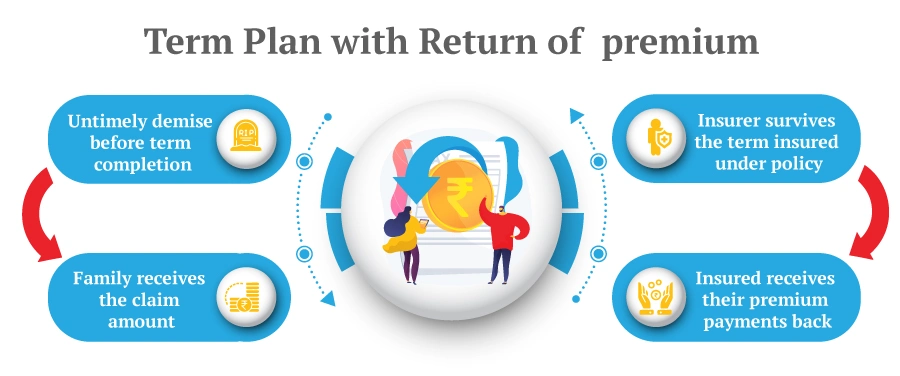
Here are the special situations when your term insurance plan may return your premiums:
Special exit value is a feature available with the regular payment option of the iSelect Smart360 Term Plan by Canara HSBC Life Insurance. Special exit value allows you to receive all the paid premiums back if you decide to leave the policy before its expiry. The returned amount will be exclusive of the following:
Any additional premiums paid due to underwriting risk.
Premiums paid for optional covers, i.e., riders in the policy.
Your policy should also meet certain criteria for you to avail of this benefit upon premature exit. A special exit value will be available if:
You have attained the age of 65.
The policy has completed at least 25 years if the total tenure was 40-44 years or 30 years for longer policy tenure..
This feature is available only for the regular pay term plan, where the maximum maturity age does not exceed 85 years. The policy will expire after the payout under this benefit.
One of the most common mistakes policyholders make is assuming they will automatically get their premiums back if they exit a term plan early. Many do not read the policy document in detail or fail to understand the type of term plan they have purchased. It is important to know whether the plan includes a return of premium feature or a special exit benefit. Without this clarity, an early exit may lead to financial loss and disappointment.
Another mistake is exiting a policy based on short-term money issues. Cancelling the plan to save on monthly costs can leave dependents without protection. A better option could be to reduce the cover or switch to a limited pay plan. Before taking any such step, it is always wise to speak to a financial advisor or the insurance company.
Exiting a policy early may also impact tax benefits. Premiums paid for term insurance are often eligible for deductions under applicable income tax rules. However, if the policy is cancelled within a short time, you may lose these benefits. Also, any payout received could become taxable depending on the reason for exit and the total benefit amount.
Always check the terms to avoid unexpected tax consequences.
While exiting a term insurance policy early might seem like a financial choice, it needs careful thought and planning. Not all plans offer a refund on exit, and even if they do, it comes with conditions. The best way to avoid confusion is to choose a plan that suits your long-term needs.
At Canara HSBC Life Insurance, we offer flexible term plans with smart features like return of premium and special exit options. These features help you remain financially protected while also giving you the option to receive your premiums back if the policy conditions are met.
Explore their plans carefully before you decide. Your term plan is not just a policy. It is the promise of a secure tomorrow.


Canara HSBC Life Insurance offers online term insurance plans to secure your family financially in your absence.