Written by : Knowledge Centre Team
Last published : 2026-01-10
8 minutes read
Share

A critical illness can have a significant financial impact on a family. The cost of treatment and ongoing medical care can be high, and you may have to take time off work while you recover. This often leads to both a loss of income and a sharp increase in expenses. In many cases, families may even incur debt to manage the financial burden.. A lump sum payout from a critical illness insurance plan can provide timely financial support, helping you avoid monetary distress during prolonged or severe health conditions.
Critical illness insurance is a type of health cover that provides a fixed lump sum amount if you are diagnosed with a listed critical illness, such as cancer, heart attack, or stroke. The benefit amount and payment from the critical illness insurance plans are not linked to your actual medical bills and can be used as needed, whether for treatment, rehabilitation, or everyday expenses. It acts as a financial safety net at a time when income may be disrupted, but costs continue to rise.
Key Takeaways
|
Critical illness insurance works by providing you with a lump sum amount if you are diagnosed with a covered illness. This money can be used for
Paying for medical treatment and hospital expenses
Compensating for lost income during recovery
Managing household or lifestyle expenses during illness
The illnesses covered and the definition of a critical illness can vary between insurers. However, the Insurance Regulatory and Development Authority of India (IRDAI) considers 20 health conditions as critical illnesses. Some plans, such as the iSelect Smart360 Term Plan by Canara HSBC Life Insurance, offer coverage for 40 different health conditions.
An OTP has been sent to your mobile number

Sorry ! No records Found
Thank You for submitting the response, will get back with you.
Thank you for your interest in our product. Our financial expert will connect with you shortly to help you choose the best plan.
The premium for critical illness insurance is not fixed; it varies based on individual health risks and personal profile. Insurers assess several factors before determining how much you will pay for coverage. These include your age, lifestyle habits, existing health conditions, and overall medical history. Understanding these factors can help you make an informed choice and plan your finances better.
For example:
Smokers usually pay more than non-smokers due to increased health risks
The premium for an older insured is higher than a younger insured, as the probability of illness rises with age
If you have a pre-existing health condition like diabetes, you may have to pay a higher premium than normal
This will depend on the insurer, but in most cases, critical illness cover pays out once you have been diagnosed with the condition, or if it is determined that the condition is chronic and irreversible. Typically, the claims can be processed within 30 days after you submit all the necessary documents.
It is important to note that most insurers have a defined waiting period from the start of the policy before the cover becomes active. Additionally, the diagnosis must meet the specific criteria outlined in the policy terms. For example, a heart attack or cancer diagnosis must often be of a certain severity to be eligible for the payout. Reviewing these conditions beforehand can help avoid confusion during claims.
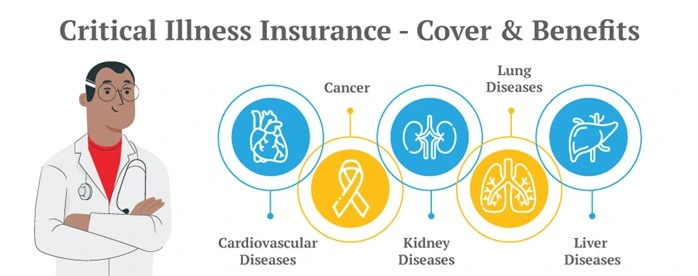
Critical illness insurance is popular for several reasons. It provides peace of mind knowing that you and your family will be taken care of financially if you experience a serious illness. The plan is designed to give you the financial security to take time off from work to focus on your recovery.
Some of the additional reasons for its popularity are listed below:
The policy makes it easier to access and pay for medical services that may otherwise be beyond the budget.
The money can be used to pay for illnesses or lines of treatment not covered under a Mediclaim or health policy.
Even if your Mediclaim covers most of the bills, this policy can help you pay for daily living expenses and stop worrying about incidental expenses.
Transportation expenses, buying wheelchairs, modifying homes to make navigation easier, etc., can be covered using this lump sum amount.
Terminally ill patients can use the funds to spend the remainder of their lives doing what they enjoy the most. The amount received from this policy can be used to fund such expenses.
The best way to choose a critical illness insurance plan is to first assess your needs and then compare different life insurance policies to find the one that best suits your needs. It is also important to read the fine print carefully to fully understand the coverage and exclusions.
There are a few factors that you must keep in mind while choosing a critical illness plan:
The critical illness plan must have a broad list of covered illnesses. If it covers a limited number of illnesses, it may not serve its purpose when needed
Check whether the lump sum benefit is adequate to cover both medical and non-medical expenses
The waiting period should be reasonably short so that you are eligible for benefits sooner
Look for any additional rider benefits that enhance coverage
Conditions for payout vary depending on the insurer and the specific policy terms. For example, some policies disburse money on diagnosis, of say, cancer, or while others may pay out the coverage amount when the cancer has spread from the primary location and becomes life-threatening.
Like other insurance policies, critical illness policies also have certain clauses that you must be cognisant of when signing up. An incident of a stroke may not be sufficient reason for an insurer to disburse a payment unless, say, the neurological damage persists for more than 30 days.
The chances of being diagnosed with a critical illness are relatively low. However, the chances increase as you get older. Make sure that the plan you choose covers the type of care that you need.
A critical illness can disrupt life in more ways than one: physically, emotionally, and financially. Having a dedicated cover that supports you during such a phase can make a significant difference. That’s why it’s essential to evaluate your insurance options carefully and choose a plan that fits your needs today and in the future. Term plans by Canara HSBC Life Insurance, with optional critical illness cover, can offer this added layer of financial protection when it matters most. With the right plan in place, you can focus on recovery without worrying about the financial impact of a serious diagnosis.


Canara HSBC Life Insurance offers online term insurance plans to secure your family financially in your absence.