how-to-save-tax-on-salary-arrears

How to Save Tax on Salary Arrears in India?

Salary arrears are taxed and how Section 89(1) relief helps reduce tax burden by spreading income across previous years

Written by : Knowledge Centre Team

2025-11-23

3091 Views

8 minutes read

Many a time we receive the salary due from our employers at a date later than the year the salary was earned in. For instance, if you are a government employee then the implementation of a pay commission report could change your salary or pension amount post facto. Another example is if you are changing jobs just when the financial year is due to end. In that case you could receive the last couple of salaries with your full and final settlement. These types of emoluments, paid after the financial year they were earned, generally qualify as arrears. Besides saving taxes on salary arrears, the Income Tax Act also provides for tax savings through other sections like 80C.

When a payment arrear is received, it changes one’s income tax situation. While you are actually in the X income bracket by virtue of your total taxable income, it might push you up in the income tax slab structure. Moreover, the tax slab might be higher because the government changed it in a particular year. As such the income tax rules have been designed to help you deflect an extraneous income tax slab arising from salary arrears by settling it in the actual years they were earned.

This relief can be sought under Section 89(1) of the Income Tax Act. Section 89(1) allows any citizen to claim the tax benefit for salary received in arrear, gratuity received for past services extending a period of not less than 5 years but less than 15 years, compensation on termination of employment, and payment of commutation of pension.

However, it is mandatory to fill Form 10E to avail the relief. While it is like any other income tax form such as 16A, 16B, 16C it’s always good to know the specifics of a particular form. As such let’s take a look at a step by step process of how to fill 10E.

How to fill 10E?

  • Visit www.incometaxindiaefiling.gov.in to file 10E
  • Login with your PAN card details and password
  • Click on the ‘e-File’ option on the status bar on top after you have successfully logged in
  • Now select the option of Income Tax Forms from the drop down menu
  • Select Form 10E- Form for Relief u/s 89 from the drop-down box of Form Name
  • Now, choose the relevant Assessment Year and Submission Mode to continue further
  • A new page will appear — the first tab in in this page will have important instructions and tips on how to fill 10E such as saving as you go, adding rows to enter more values etc
  • In the second tab, you will find basic details like name, address, PAN number etc already filled. Choose the residential status from the drop-down menu
  • Now, you need to fill the relevant annexure. There will be four — one for salary arrear or premature withdrawal of provident fund, and one each for commutation of pension, compensation received on termination of employment, relief in gratuity payment for 5-15 years of service and relief for gratuity for service rendered in excess of 15 years
  • Verify the form and then select preview & submit.
  • You can also correct errors in the form if you spot any before submitting by clicking on ‘Edit’
  • You should download a PDF copy for future reference
  • If you are unable to fill up the form at one go, then you can select ‘Save Draft’ which will allow you to complete it later where you left off
  • To get into the saved draft version you have to follow the first few steps in the same manner

Save Taxes While Building Long-Term Wealth

Please enter correct name Please enter the Full name
Please enter valid mobile number Please enter Mobile Number
Please enter valid email Please enter Email

Enter OTP

An OTP has been sent to your mobile number

Didn’t receive OTP?

Application Status

Name

Date of Birth

Plan Name

Status

Unclaimed Amount of the Policyholder as on

Name of the policy holder

Policy No.

Address of the Policyholder as per records

Unclaimed Amount

Error

Sorry ! No records Found

.  Please use this ID for all future communications regarding this concern.

Request Registered

Thank You for submitting the response, will get back with you.

Thank you for your interest in our product. Our financial expert will connect with you shortly to help you choose the best plan.
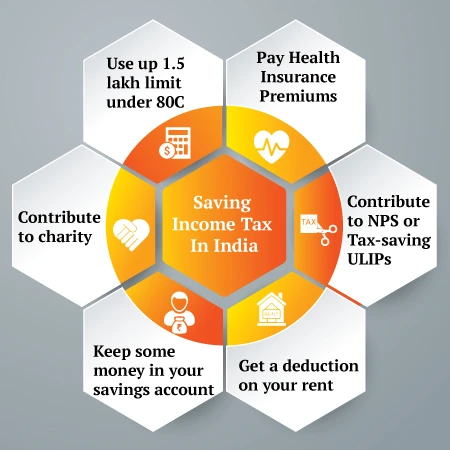
Checking eligibility and tax relief under section 89(1)


  • Determine the tax payable on the total income, including the arrear, in the year it is received.
  • Determine the tax payable on the total income, excluding the arrear, in the year it is received.
  • Find out the difference between the amounts arrived at in the previous two steps
  • Determine the tax payable on the total income, including the arrear, in the year the arrear amount arose.
  • Determine the tax payable on the total income, excluding the arrear, in the year the arrear amount arose.
  • Find out the difference between the amounts arrived at in the previous two steps
  • Only if the amount arrives at in Step (3) is more than that in Step (6), you are eligible to claim relief under Section 89(1).

Important points to remember

  • The income tax department has made it compulsory to file Form 10E if you want to avail the relief under section 89(1) since financial year 2014-15 (assessment year 2015-16)
  • You should choose the assessment year in which you have received the arrears. For instance, if salary arrears are received in 2019-20, choose assessment year 2020-21
  • Your employer could seek a confirmation from you regarding the submission of Form 10E before making adjustments to your taxes and allowing tax benefits. It is not, however, compulsory to submit a copy of your 10E to the employer
  • Tax relief under Section 89(1) is also applicable for those who receive family pension in arrears. You can determine your eligibility in the same manner as mentioned above
  • If you have filled 10E after filing of your income tax returns, then the Income Tax Department might not permit the Section 89(1) relief claimed in ITR.
     

More tax benefits

Click here to use - Income Tax Calculator

Besides saving taxes on salary arrears, the Income Tax Act also provides for tax savings through other sections — most notably through Section 80C which allows you to save tax on life insurance or term insurance premiums. You avail a tax deduction up to Rs 1,50,000 through your life insurance and term insurance premiums.

If you are planning to buy a life insurance policy or a term insurance cover, do consider the iSelect Smart360 Term Plan from Canara HSBC Life Insurance - with premiums starting as low as Rs 12 per day. It is a tailor-made plan with a whole life cover, return of premium, multiple payout options, increase coverage option and tax benefits.

Recent Blogs

234C of Income Tax Act, 234A, and 234B Explained

Tax on Income Interest Under Sections 234A, 234B & 234C of IT Act

23 July '26
9127 Views
13 minute read
Understand tax on interest income and how interest under Sections 234A, 234B & 234C works, plus links to deductions like Sec 24 & Sec 80E for salaried taxpayers in Income Tax Act of India.
Read More
Tax Saving
surcharge on income tax

Income Tax Surcharge FY 2026-27: Rates & Marginal Relief Explained

23 July '26
4424 Views
9 minute read
Understand surcharge rates, income slabs & marginal relief calculation with practical examples for FY 2026-27.
Read More
Tax Saving
How Do I File Income Tax In India?

How Do I File Income Tax in India? Simple Guide

23 July '26
2406 Views
11 minute read
Learn how to file income tax in India step by step. A simple guide to make tax filing easy and stress-free for salaried and self-employed.
Read More
Tax Saving
Cancel Gst Registration Thum Desktop

How to Cancel GST Registration Online in 2026?

09 July '26
1116 Views
8 minute read
Learn how to cancel GST registration online, required documents and important steps involved in the process.
Read More
Tax Saving
Importance Of Taxes Thum Desktop

Taxation of Interest on EPF Contribution: All You Need to Know

08 July '26
1820 Views
7 minute read
Learn how to calculate taxable interest on provident fund (EPF) contributions to maximize your savings. Understand the EPF interest rate and its tax benefits.
Read More
Tax Saving
what-is-long-term-capital-gains-tax-in-india

Long Term Capital Gains Tax in India - LTCG Tax & Rates

08 July '26
4935 Views
12 minute read
Learn Long-Term Capital Gains Tax in India for 2025-26. Learn about tax implications, exemptions, and investment strategies to secure your financial future.
Read More
Tax Saving
Importance Of Taxes Thum Desktop

Section 24 Income Tax Act: Its Exemptions and Deduction Limits

08 July '26
924 Views
4 minute read
Explore Section 24 of the Income Tax Act, its exemptions, and deduction limits. Stay informed and make smart tax decisions with Canara HSBC Life Insurance.
Read More
Tax Saving
Tax Implications Of Surrendering Insurance Policy Thum Desktop

New vs Old Tax Regime FY 2025-26: Salary Break-Even Guide

08 July '26
1342 Views
11 minute read
Compare new vs old tax regime for FY 2025-26. Understand salary break-even points, deductions, and benefits to choose the right regime for your income.
Read More
Tax Saving
How To Budget For A Dream Vacation Thum Desktop

LTA Tax Benefits Explained: Claim Leave Travel Allowance Smartly

08 July '26
853 Views
6 minute read
Discover how Leave Travel Allowance (LTA) helps you save tax on domestic travel. Learn eligibility, exemption limits, and how to file claims under Section 10(5).
Read More
Tax Saving

Tax Savings - Top Selling Plans

We bring you a collection of popular Canara HSBC life insurance plans. Forget the dusty brochures and endless offline visits! Dive into the features of our top-selling online insurance plans and buy the one that meets your goals and requirements. You and your wallet will be thankful in the future as we brighten up your financial future with these plans.

Family Shield: Enhanced Protection

iSelect Smart360 Term Plan
  • 3 Plan options
  • Life cover till 99 years
  • Steady income benefit
  • Block your premium at inception

Fixed Returns, Zero Risks & Worries

iSelect Guaranteed Future Plus
  • 4 Plan options
  • Life cover + Guaranteed benefits
  • Accidental death benefit
  • Premium protection cover

Start Young, Pay Less, Stay Secured

Young Term Plan
  • Life cover till 99 years
  • Coverage for spouse
  • Block your premium rate
  • Covers 40 critical illness