


Do 80D Medical Expenses Claim Need Any Proof?

Do 80D Medical Expenses Claims Need Any Proof?

Do your 80D medical claims require proof? Get simple guidance on documentation rules for tax benefits.

2025-04-15

226 Views

8 minutes read

Section 80D of the Income Tax Act is an amazing option for Indian taxpayers to reduce their taxable income. It can be used to claim deductions for health insurance premiums and, importantly for some, medical expenses. It also eases your healthcare financial burden. However, when the claim process begins to narrow down, a common query regarding the documentation arises.

Well, the uncertainty around required paperwork can sometimes make you hesitant or unsure about claiming the full deduction you are entitled to. Therefore, today, we are going to clarify this confusion with this quick guide on 80D tax claim process. 

The aim is to help you gain knowledge of exactly what is needed, or not needed, when claiming tax benefits, especially under Section 80D. So, without further delay, let’s get going.
 

Key Takeaways

  • Section 80D allows deductions for health insurance premiums, preventive check-ups, and medical expenses for senior citizens.

  • Proofs like payment receipts, prescriptions, and diagnostic reports should be safely preserved for up to six years.

  • Payments must be made through digital or banking modes (except preventive check-ups up to ₹5,000).

  • Lack of documentation can result in the denial of deductions and penalties during scrutiny.

  • Using tools like an income tax calculator and proactive planning can help maximise your 80D tax benefits smartly.

Protect Your Family’s Health and Financial Future

Please enter correct name Please enter the Full name
Please enter valid mobile number Please enter Mobile Number
Please enter valid email Please enter Email

Enter OTP

An OTP has been sent to your mobile number

Didn’t receive OTP?

Application Status

Name

Date of Birth

Plan Name

Status

Unclaimed Amount of the Policyholder

Name of the policy holder

Policy No.

Address of the Policyholder as per records

Unclaimed Amount

Error

Sorry! No records Found

Request Registered

Thank You for submitting the response, will get back with you.

Complaint Registered

.  Please use this ID for all future communications regarding this concern.

Request Registered

Thank You for submitting the response, will get back with you.

Thank you for your interest in our product. Our financial expert will connect with you shortly to help you choose the best plan.

Sorry

Understanding Section 80D in Simple Terms

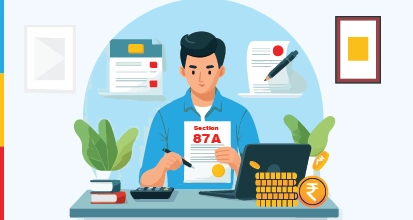
Section 80D can be considered more or less like a safe wall to lean on for tax-paying insurance holders. It offers deductions in the following situations:

  1. When the premiums are being paid for specific health insurance policies.

  2. For any expenses incurred towards preventive health check-ups.

  3. Expenses for the medical treatment of senior citizens without health insurance.

Do you know

Did You Know?

80D deduction is available for claims over and above the ₹1.5 lakh permitted under Section 80C.
 

Source: FIY Finance

Young Term Plan 1 Crore

Who Can Claim 80D Tax Deduction?

You are eligible to claim the 80D deduction for premiums or medical expenses paid on behalf of:

  • Yourself.

  • Your spouse.

  • Your children.

  • Your parents (dependent or independent).

The maximum deduction limits depend on the age group of the insured individuals. Here's a simple view:

Category

Maximum Deduction (₹)

Self, Spouse, Children (below 60)

₹25,000

Parents (below 60)

₹25,000

Parents (60 or above)

₹50,000

Self, if 60 or above

₹50,000

When Medical Expenses Come into the Picture?

For senior citizens without an active health insurance policy, medical expenses up to ₹50,000 can be claimed as a deduction under Section 80D. A couple of instances where you’re eligible to claim medical expenses include:

  • Doctor consultation fees.

  • Medicines and pharmacy bills.

  • Diagnostic tests like X-rays, MRI scans.

  • Medical equipment like pacemakers or hearing aids.

This becomes an essential relief, especially when getting health insurance for older family members is difficult due to pre-existing conditions.

Do you Need Proof for 80D Medical Expenses Claim?

The short answer is yes. While the income tax department may not ask you to submit proofs during return filing, it is important to maintain proper documentation. This is especially helpful in case your file is selected for scrutiny later.

You should retain the following documents:

  • Payment receipts.
  • Doctor's prescription (if possible).
  • Hospital bills.
  • Medicine bills.
  • Diagnostic report receipts.

Having a clear record ensures that your claim under the 80D tax deduction remains valid and cannot be questioned later.

Important Points to Remember About 80D Documentation

When it comes to claiming 80D deductions, documentation plays a role just as important as paying your premiums or medical bills. Imagine building a strong house but forgetting to lock the doors. Well, that's what claiming a deduction without proper records feels like.

To ensure you protect your benefits and enjoy hassle-free tax savings, here are some crucial things you must always keep in mind:

  1. Payment Mode Matters: Cash payments are fine only for preventive health check-ups up to ₹5,000. For medical expenses or insurance premiums, digital or banking channels must be used like UPI, debit/credit cards, net banking, or cheques. Even if you pay for your parents' healthcare digitally, you can still claim the 80D tax deduction.

  2. Keep Documents for a Few Years: As a rule of thumb, preserve your documents for at least six years. This period covers the window during which the Income Tax Department can open an assessment for scrutiny. Think of it like keeping an umbrella even when the skies are clear, better safe than sorry later.

  3. Maintain Organised Records: A little organisation today can prevent last-minute stress when needed later. Create a simple file, either digital or physical, to store your.

    • Premium payment receipts.
    • Copies of insurance policies.
    • Medical bills, prescriptions, and diagnostic reports.

What Happens if You Don't Have Proof?

Without proof, your 80D tax deduction can be disallowed during assessment. This may lead to:

  • Revised tax demand.

  • Additional interest and penalties.

  • Loss of deductions that you are otherwise legally entitled to.

In other words, without your "ticket" (proof), you may be denied the "ride" (deduction).

How Can You Maximise Your 80D Benefits Smartly?

You can always plan ahead to maximise the benefits using an income tax calculator. This tool helps you estimate potential savings before you make any health-related financial decisions.

Here’s a quick and short checklist that can help you maximise your 80D claim:

  1. Pay insurance premiums digitally.
  2. Arrange preventive health check-ups annually.
  3. Maintain health records for dependent senior citizens.
  4. Prefer cashless treatment where possible (for easy documentation).
  5. Use the income tax calculator before the financial year ends to optimise contributions.

At Canara HSBC Life Insurance, through our official website, we strongly encourage proactive planning by making the income tax calculator easily accessible. Its user-friendly interface enables you to assess and manage financial and health-related matters easily.

Final Thoughts

Claiming Section 80D tax deductions may seem like a maze at first, but once you know the rules, it becomes a very manageable. Always remember, while direct submission of proofs is not required, preserving them carefully is critical for your peace of mind.

By using simple tools like a tax calculator and staying organised, making the most of your tax benefits becomes straightforward.

Ultimately, your focus should remain on securing the health and financial security of yourself and your loved ones.

Glossary

  1. Tax Deductions: Reductions in taxable income allowed by law, helping lower the total tax payable by an individual or business.
  2. UPI: A real-time payment system in India that instantly transfers money between bank accounts via mobile apps.
  3. Senior Citizens: In India, individuals aged 60 years and above are classified as senior citizens for tax and financial benefits.
  4. Scrutiny: A detailed examination by the Income Tax Department to verify the accuracy of information provided in a tax return.
Glossary book
Glossary Image Desktop

FAQs

Yes, if they are senior citizens without active health insurance, up to ₹50,000 can be claimed.

Payments must be made digitally via UPI, debit/credit cards, net banking, or cheques.

It is advisable to keep them safely for at least six years.

Your claim can be rejected, and you may face revised tax demands and penalties.

It helps estimate tax savings and plan premium payments or medical expenses smartly.

Recent Blogs

234C of Income Tax Act, 234A, and 234B Explained

Tax on Income Interest Under Sections 234A, 234B & 234C of IT Act

23 July '26
9127 Views
13 minute read
Understand tax on interest income and how interest under Sections 234A, 234B & 234C works, plus links to deductions like Sec 24 & Sec 80E for salaried taxpayers in Income Tax Act of India.
Read More
Tax Saving
surcharge on income tax

Income Tax Surcharge FY 2026-27: Rates & Marginal Relief Explained

23 July '26
4424 Views
9 minute read
Understand surcharge rates, income slabs & marginal relief calculation with practical examples for FY 2026-27.
Read More
Tax Saving
How Do I File Income Tax In India?

How Do I File Income Tax in India? Simple Guide

23 July '26
2406 Views
11 minute read
Learn how to file income tax in India step by step. A simple guide to make tax filing easy and stress-free for salaried and self-employed.
Read More
Tax Saving
Cancel Gst Registration Thum Desktop

How to Cancel GST Registration Online in 2026?

09 July '26
1116 Views
8 minute read
Learn how to cancel GST registration online, required documents and important steps involved in the process.
Read More
Tax Saving
Importance Of Taxes Thum Desktop

Taxation of Interest on EPF Contribution: All You Need to Know

08 July '26
1820 Views
7 minute read
Learn how to calculate taxable interest on provident fund (EPF) contributions to maximize your savings. Understand the EPF interest rate and its tax benefits.
Read More
Tax Saving
what-is-long-term-capital-gains-tax-in-india

Long Term Capital Gains Tax in India - LTCG Tax & Rates

08 July '26
4935 Views
12 minute read
Learn Long-Term Capital Gains Tax in India for 2025-26. Learn about tax implications, exemptions, and investment strategies to secure your financial future.
Read More
Tax Saving
Importance Of Taxes Thum Desktop

Section 24 Income Tax Act: Its Exemptions and Deduction Limits

08 July '26
923 Views
4 minute read
Explore Section 24 of the Income Tax Act, its exemptions, and deduction limits. Stay informed and make smart tax decisions with Canara HSBC Life Insurance.
Read More
Tax Saving
Tax Implications Of Surrendering Insurance Policy Thum Desktop

New vs Old Tax Regime FY 2025-26: Salary Break-Even Guide

08 July '26
1342 Views
11 minute read
Compare new vs old tax regime for FY 2025-26. Understand salary break-even points, deductions, and benefits to choose the right regime for your income.
Read More
Tax Saving
How To Budget For A Dream Vacation Thum Desktop

LTA Tax Benefits Explained: Claim Leave Travel Allowance Smartly

08 July '26
852 Views
6 minute read
Discover how Leave Travel Allowance (LTA) helps you save tax on domestic travel. Learn eligibility, exemption limits, and how to file claims under Section 10(5).
Read More
Tax Saving

Tax Savings - Top Selling Plans

We bring you a collection of popular Canara HSBC life insurance plans. Forget the dusty brochures and endless offline visits! Dive into the features of our top-selling online insurance plans and buy the one that meets your goals and requirements. You and your wallet will be thankful in the future as we brighten up your financial future with these plans.

Family Shield: Enhanced Protection

iSelect Smart360 Term Plan
  • 3 Plan options
  • Life cover till 99 years
  • Steady income benefit
  • Block your premium at inception

Fixed Returns, Zero Risks & Worries

iSelect Guaranteed Future Plus
  • 4 Plan options
  • Life cover + Guaranteed benefits
  • Accidental death benefit
  • Premium protection cover

Start Young, Pay Less, Stay Secured

Young Term Plan
  • Life cover till 99 years
  • Coverage for spouse
  • Block your premium rate
  • Covers 40 critical illness