Written by : Knowledge Centre Team
Last published : 2026-01-08
7 minutes read
Share

Life is full of uncertainties. Life is full of uncertainties, and health emergencies are among the most sudden and financially draining challenges you may face. While having a health insurance plan is essential, many people assume it will fully protect them in every situation, but that’s not always the case.
In a serious medical emergency, you’re often expected to:
But what happens when your health insurance doesn’t cover all the costs, has sub-limits, or excludes certain treatments altogether? This is where many policyholders face a harsh reality- their existing health cover might not be enough.
This article explores the gaps in typical health insurance policies and how you can better prepare for high-cost, life-threatening illnesses that go beyond basic coverage.
Key Takeaways
|
Health emergencies are of multiple types depending on the cause. For example, the following three are the most common types of health emergencies:
The first kind of health emergencies may need you to be hospitalised and will include the cost of hospital care as well as medicines and surgeries.
Accidental injuries may require only monitoring, and in severe cases, emergency surgeries. For the time of recovery, you will need to stay home and away from work for a while.
Both accidental and normal hospital emergencies are covered by your health insurance. The health policy will either reimburse part of your bills or simply offer a cashless treatment benefit. The treatment cost of life-threatening health emergencies is higher than the other two emergencies.
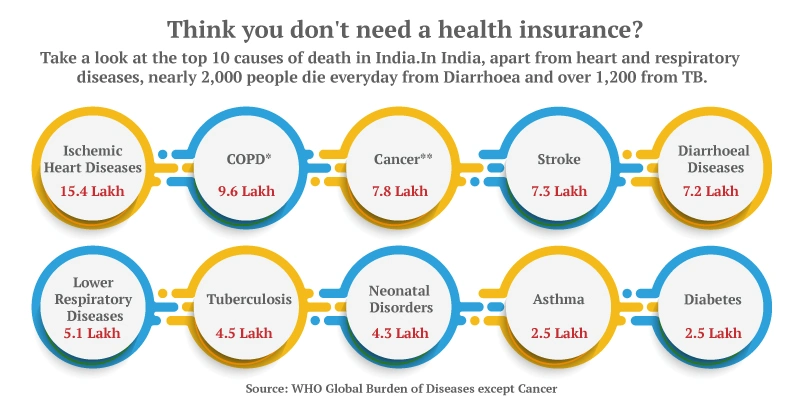
For example, the cost of open-heart surgery can be somewhere between ₹ 1.75 lakh and ₹ 4.25 lakh in a private hospital in India. Cancer is another health emergency that can break you financially if you are not prepared for it. Depending on the type of cancer one has, the cost of treatment can range from ₹ 1.75 lakhs to ₹ 5.5 lakhs.
Learn when is the right time to buy a health insurance plan.
An OTP has been sent to your mobile number

Sorry! No records Found
Thank You for submitting the response, will get back with you.
Thank You for submitting the response, will get back with you.
Thank you for your interest in our product. Our financial expert will connect with you shortly to help you choose the best plan.
Planning for emergencies, especially critical health situations, requires a thoughtful approach. A strong plan typically rests on three key pillars:
While emergency funds can take care of your family’s important needs and household expenses while you recover, the insurance will take care of the medical costs. However, in the case of critical illnesses, your health and emergency funds will not suffice.
Critical health insurance plans can help you tackle such medical emergencies better. Here’s why they stand out:
Health insurance cover is a good option to deal with basic health-related issues. If you have one, you should know its benefits and limitations. Health insurance offers you specified financial protection against health-related expenses. In general, a health policy covers the following:
The cost of hospitalisation includes room charges, oxygen cylinders, tests, etc.
Daycare treatment cost, when you don't need to be hospitalised and released in less than 24 hours
Consultation and doctor's fee
Keep in mind that health insurance may only cover a portion of the total treatment cost, depending on the policy terms, sub-limits, and exclusions.
For example, if you incur a bill of ₹10,000 for a covered condition, the insurer might reimburse only part of that amount.
Critical illnesses such as heart diseases, kidney ailments, stroke, etc., can come unannounced anytime. The approximate cost of treatment for some of the critical illnesses is as below:
Angioplasty: The angioplasty with a single stent can cost you between ₹ 75,000 and ₹ 3.5 lakhs, depending on the city and hospital.
Kidney transplant: The cost of a kidney transplant for both the donor and patient can be as high as ₹ 15 lakhs.
Stroke: The cost of treatment in case of a stroke can go up to ₹ 10 lakhs.
These numbers should give you an idea of where the need stands compared to normal health cover.
Critical health insurance provides a lump-sum payout if you're diagnosed with a covered life-threatening illness. This payout gives you the flexibility to use the money as needed, whether for medical treatment, recovery, or supporting your family.
There are two main types of plans:
Major Critical Illness Plan: Covers up to 26 pre-defined critical illnesses in advanced stages
Specific Critical Illness Plans: Tailored covers for diseases like cancer or heart-related conditions
Before your policy becomes active, you’ll need to choose from the following options:
Assuming you select an increasing cover option and regular income benefit under both the plans
Feature | Major Critical Illness | Specific Cover for Cancer or Heart Ailments |
|---|---|---|
Cost of the Cover | Approx ₹320 p.m. for 30-year coverage of ₹20 lakhs (30-year-old male) | ₹689 p.m. for Heart, ₹373 p.m. for Cancer |
Keeping Up with Inflation | The cover increases 10% annually till the claim or 150% of the base sum assured | Same as left |
Minor Conditions | No claim for minor stage diagnosis | 25% of the sum assured is paid for a minor condition |
Premium Waiver | Not applicable | Premiums waived post minor claim, sum assured growth stops |
Major Condition | 100% sum assured paid if no previous claim | 75% paid if earlier minor claim; else 100% paid |
Regular Income | 1% of the initial sum assured is paid for 60 months | Same as left |
Another option is a term insurance plan that includes benefits for a terminal illness diagnosis. You get a lump sum payout if you or a family member is diagnosed with such a condition.
When evaluating plans, ensure they offer the following features:
Cover early stages: Immediate payout upon diagnosis is important.
Provides regular income for the family: Ensures support during income loss.
Premium waiver on diagnosis: Helpful if the policyholder is the sole earner.
Increasing cover option: Keeps up with inflation in healthcare.
Return of Premium Option: Useful for policyholders who want returns on investment if no claims are made.
While a standard health insurance policy is essential, it is not always sufficient, especially when facing life-threatening illnesses or long-term treatments. Rising medical costs, policy sub-limits, non-covered treatments, and income disruptions during recovery can leave dangerous gaps in your financial protection.
To truly safeguard yourself and your family, you need to think beyond basic health insurance. Critical illness plans, emergency funds, and a reliable line of credit can create a more complete financial safety net. By planning ahead and choosing the right mix of coverage, you’re not just buying a policy, you’re buying peace of mind when you’ll need it most.